
Homeschool families & science classrooms
Trace the inventions that changed the world
Hardly anything was invented by one person in one moment. See 136 inventions on one line, from the first pottery to the web, then follow any of them through every step, every person, and the inventions it built on.
136 inventions · 382 dated steps · 10 kinds of problem
Every invention stands on others.
Each dot is one invention, at its earliest known step, in the lane for the kind of problem it solved. Lines join each one to the inventions it built on. Select a dot to light up its chain and read its story below.
Showing below: Wheel and axle, first known c. 3600–3300 BC · Transport Read about it
Transport · Invention
Wheel and axle
The problem
Heavy loads had to be dragged or carried.
Why it mattered
Wheeled vehicles appear at about the same time across a wide area; the wheel changed farming, war and trade. Mesoamerica made wheeled toys but no wheeled vehicles.
Worth knowing.
Every step 2
No single person is known.
-
c. 3600–3300 BC Earliest evidence
Evidence of wheeled vehicles appears almost at once in several regions.
-
c. 2000 BC Improvement
Spoked wheels make light, fast chariots.
Inventions in pictures · 41 of 136
See where they fall across history.
The 41 inventions with a picture, oldest first, on the same stretched line as the chart above. The date under each name is the invention's earliest known step; the date on its picture is when the picture was made, often much later. Choose one to read about it.
Before 3000 BC
Cuneiform writing c. 3400–3100 BC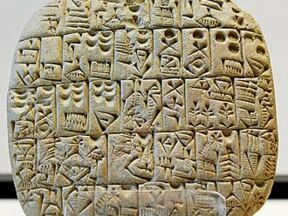 Picture from c. 2600 BC
Papyrus writing material
c. 3100–2900 BC
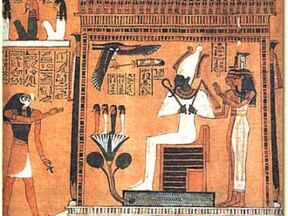 Picture from c. 1275 BC
3000 BC to AD 1
Vulcanized rubber c. 1650 BC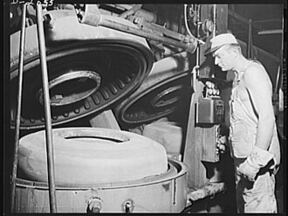 Picture from 1941
Water clock
c. 1417–1379 BC
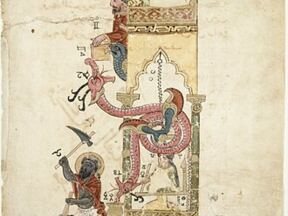 Picture from 1315
Camera obscura
4th century BC
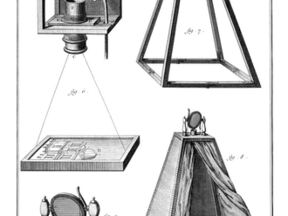 Picture from 1763
Helicopter
c. 400 BC
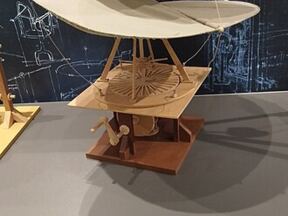 Picture from modern
Maya script
c. 300–200 BC
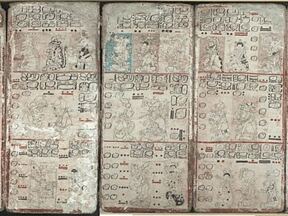 Picture from 1200s or later
Zero (placeholder and number)
c. 300 BC
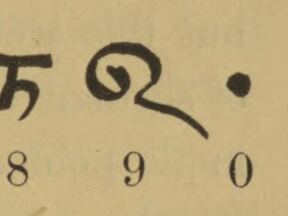 Picture from 1887
Paper
c. 200–100 BC
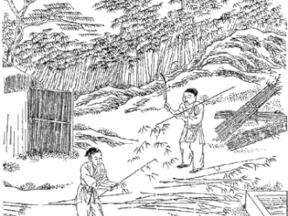 Picture from 1637
Astrolabe
2nd century BC
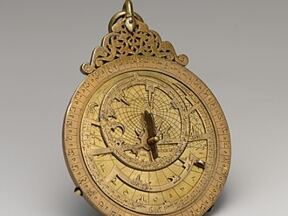 Picture from 1291
AD 1 to 999
Steam engine c. AD 10–70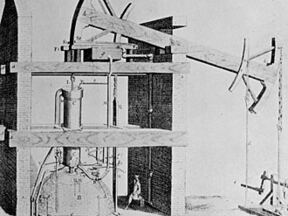 Picture from after 1717
Woodblock printing
c. AD 100–220
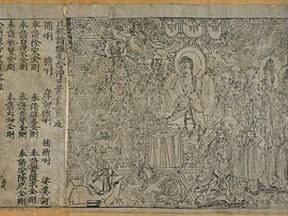 Picture from 868
Cotton gin
5th century
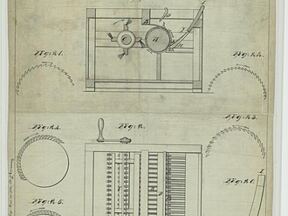 Picture from 1794
Quipu (knotted-cord records)
c. 600–1000
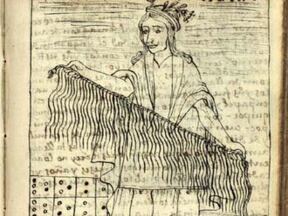 Picture from c. 1615
Mechanical clock (escapement)
AD 725
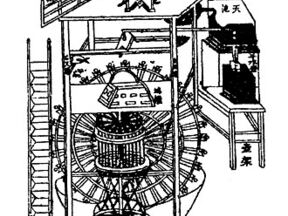 Picture from later edition
Gunpowder
c. AD 800–900
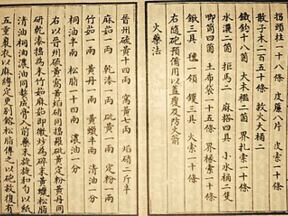 Picture from later edition
1000 to 1499
Movable type c. 1039–1048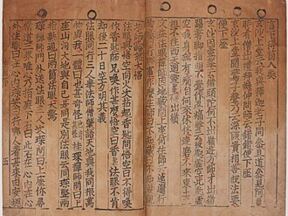 Picture from 1377
Rocket
c. 1200–1299
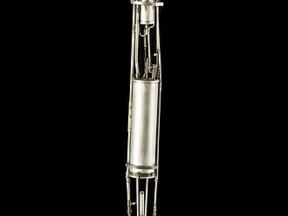 Picture from 1926
Printing press with metal movable type
c. 1436–1440
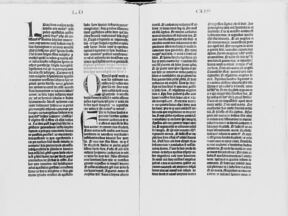 Picture from 1454–55
Hangul (Korean alphabet)
1443
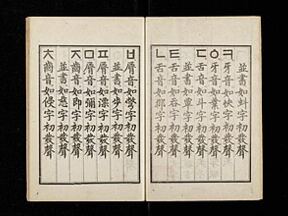 Picture from reprint
Airplane
c. 1485–1505
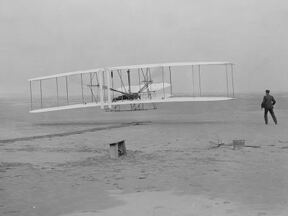 Picture from 1903
1500 to 1799
Hot-air balloon 1709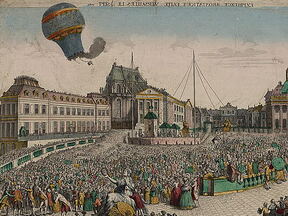 Picture from 1783
Jacquard loom (punched-card control)
1725
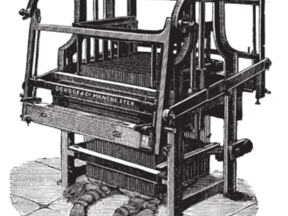 Picture from 1892
Lightning rod
1749
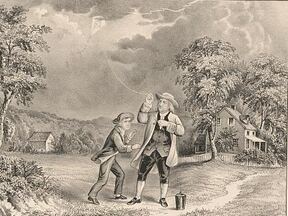 Picture from 1876
Spinning jenny
c. 1764
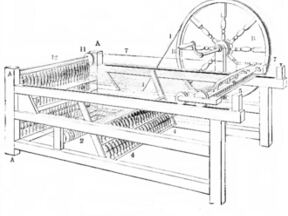 Picture from 1884
Smallpox vaccine
1774
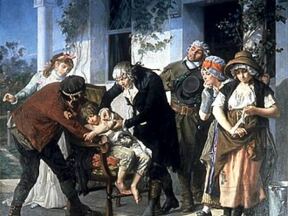 Picture from 1879
Optical (semaphore) telegraph
1792
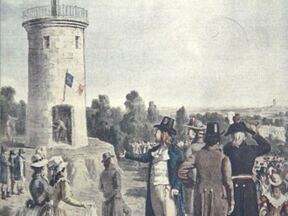 Picture from 1800s
1800s
General anaesthesia 1804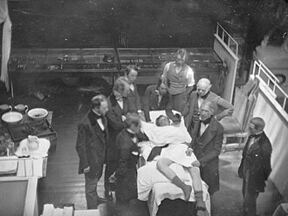 Picture from 1847
Electrical telegraph
1816
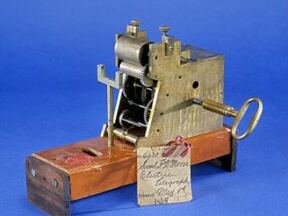 Picture from 1840s
Stethoscope
1816
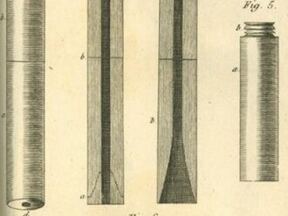 Picture from 1819
Cherokee syllabary
1821
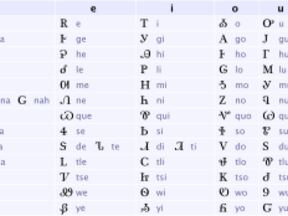 Picture from modern
Analytical Engine
1837
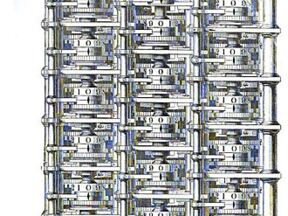 Picture from 1853
Incandescent light bulb
1840
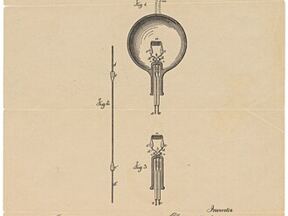 Picture from 1880
Telephone
c. 1854–1871
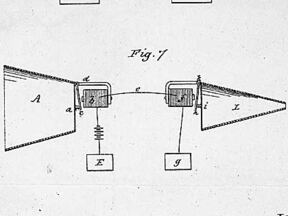 Picture from 1876
Phonograph and sound recording
1857
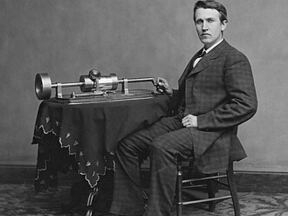 Picture from c. 1878
Traffic light
1868
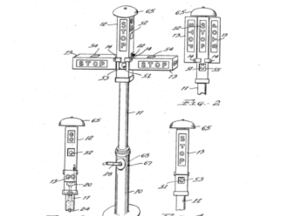 Picture from 1923
Punched-card tabulating machine
1889
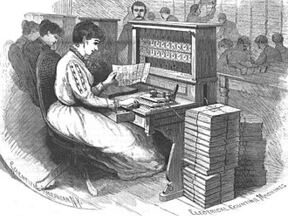 Picture from 1890
X-ray imaging
1895
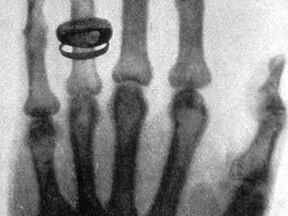 Picture from 1896
1900s
Programmable digital computer 1936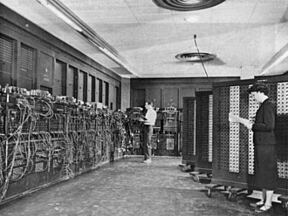 Picture from c. 1947
Polio vaccines
1950
 Picture from modern
Oral rehydration therapy
1968
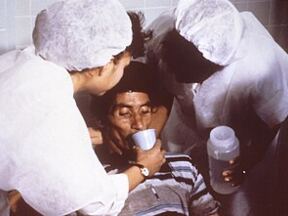 Picture from 1992
Each dot marks an invention's earliest known step; pictures that fall close together stack. Swipe sideways to see the rest.
Who invented it?
Usually, more than one person.
86 of the 136 inventions name two or more people in their story, and for 27 no one person is known at all. A famous name is often the person who made an idea practical, sold it, or patented it first, standing on the work of others.
Invented more than once, independently
People in different places reached the same idea without knowing of each other.
- Blast furnace and cast iron
- Zero (placeholder and number)
- Porcelain
- Windmill
- Sextant and octant
- Airplane
- Lightning rod
- Optical (semaphore) telegraph
- General anaesthesia
- Photography
- Electric generator (dynamo)
- Incandescent light bulb
- Bessemer steel process
- Telephone
- Television
- AC induction motor
- Hall–Héroult aluminium process
- Radio
- Transistor
- Jet engine
- Integrated circuit (microchip)
- Internet
- CT scanner
Still argued about
Specialists disagree about a date or a claim. Each is marked on its step.
For study
Ideas for family and classroom study.
Younger learners · 20 minutes
Follow a chain
Start at Paper. Follow Led to to woodblock printing, then movable type, then the printing press. Draw the four on a strip of paper, oldest first, and write one sentence about what each one needed from the one before.
Ages 11–14 · 40 minutes
Who gets the credit?
Choose the telephone or the airplane. List every person and step. If you could give one person the credit, who would it be, and what would that leave out? Is there a fairer way to say who invented it?
Ages 15–18 · one or two sessions
Check a date
Pick a step marked Disputed, such as the Bakhshali manuscript's zero. Read its source, then find two more. Why do they disagree, and what kind of evidence would settle it?
Make it your own
Build your own version.
Both lists are free in full: the 136 inventions with the problem each solved, why it mattered, where it began, who contributed and what it built on, and every dated step with its people, place and source. Join them on InventionID to make your own timeline.
Free in full. No Data Pass or API key needed. Opening this guide does not use your API allowance.
Sources and limits
Each step names its source: mostly Wikipedia articles, and also patents, Founders Online, the American Chemical Society, NobelPrize.org, the Smithsonian and the Science Museum Group. Each was checked for its year and its people's names in the text it cites. Wikidata supplied only identifiers, since its inventor and date fields are often wrong. The descriptions were written for these lists. Coverage is thinner for Sub-Saharan Africa and Oceania, and dates for knowledge kept outside writing (quipu, stick charts) are when outsiders recorded it.
Pictures are public domain or CC0, or carry no known restrictions (Library of Congress). Each picture's caption says what it shows, its credit and a link to its source.
What each record contains
Explore the dataset and its sources. These fields are in the complete download.
| Field | How to read it |
|---|---|
Invention |
The invention, discovery or technique; one record each, however many people shared it. |
Category |
One of ten: Writing and numbers, Communication, Computing, Medicine, Agriculture and food, Transport, Materials and manufacturing, Energy and power, Instruments and measurement, or Everyday life. |
Kind |
Invention, Discovery, Technique, Process, System, Writing system, Number system, Domestication or Artifact: a discovery such as penicillin is found, not built. |
FirstYear |
Year of the earliest step in its milestones (negative = BC); for the oldest, an estimate. |
FirstDate |
That first date as people write it, such as c. 1440 or 3400–3100 BC. |
Contributors |
Everyone named in its milestones, separated by semicolons; blank when no one person is known. |
Place |
Where its steps happened, separated by semicolons. |
Region |
The wider region, in words. |
ModernCountries |
Today's countries where it began, separated by semicolons. |
ProblemSolved |
What people needed before it existed. |
Significance |
What changed because of it, written for this list. |
BuiltOn |
Earlier inventions in this list it depended on. |
LedTo |
Later inventions in this list that built on it. |
Milestones |
How many dated steps it has in inventionmilestones. |
WikidataID |
Its Wikidata item, for joining with other data; Wikidata's own dates and inventors were not used. |
Working with the download? Convert CSV to JSON, or turn a column into a list with the comma separator.
For your next project
More subjects to build with.
Inventions and their milestones are free in full. The Data Pass covers the rest of the catalog.
The Data Pass includes complete downloads and API access across the catalog.
Data Pass
$69one payment / 365 days
Explore the Data PassNo account required. No automatic renewal.